
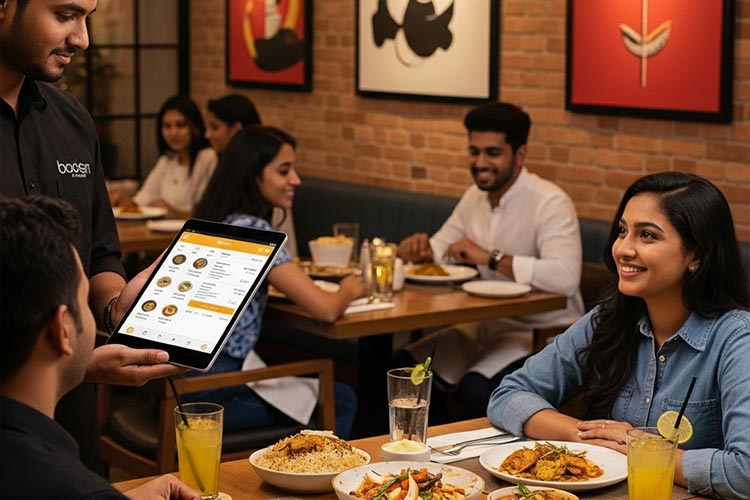
A regular who comes twice a month is worth more than five strangers who never return. Restaurant customer loyalty is not a sticker chart on the wall. It is the habit of choosing your room again because the food, speed, and treatment stayed consistent. In Bangladesh that means the same biryani portion on Friday rush, the waiter who remembers “no chilli,” and a bill that does not start an argument at the table.
Quick answer: Build restaurant customer loyalty with consistent food and service, a simple reward for repeat visits, staff who recognize regulars, and feedback you actually act on. A restaurant POS that records customer names and order history helps you spot who comes back. Dimdul installs Riser POS in Bangladesh for that floor record. It is not a full loyalty engine.
Written by Dimdul, House 10, Road 4, Kaderabad Housing, Mohammadpur, Dhaka-1207. Last updated: 24 August 2026.
What is restaurant customer loyalty?
Restaurant customer loyalty means guests return without you buying them every time. They trust the kitchen, the price, and the people at the door. One bad night—a cold plate, a wrong bill, a rude answer—can erase months of goodwill. Loyalty is built in small repeats: the office lunch crowd, the family after jumma, the student who orders the same tea every evening.
In Bangladesh, word of mouth still beats a billboard. A regular who brings two colleagues is cheaper than a boosted post that reaches strangers. Loyalty also smooths slow weeks. When rain kills walk-ins, your regulars are the covers you can still count on.
Grocery and clothing shops should not use this restaurant stack. They belong on Riser POS Retail. Medicine shops belong on Riser POS Pharmacy.
Why do regular customers matter more than one-time covers?
Acquiring a new guest costs time and often marketing spend. A returning guest already knows the menu, pays faster, and complains less when you fix a mistake quickly. Regulars also give honest feedback because they want you to stay open, not because they want a free meal.
| Guest type | What they cost you | What they give back |
|---|---|---|
| First-time walk-in | Full marketing + training staff on basics | One sale, maybe a review |
| Repeat local | Lower effort; they know the card | Steady covers, referrals |
| Regular office / family block | Predictable timing; you can prep | Bulk orders, quiet weekday fill |
| “Deal hunter” only | High discount, low margin | Leaves when the offer ends |
Do not chase volume with endless discounts. That trains people to wait for a sale, not to trust your kitchen. Loyalty grows when the experience is worth the full price most nights.
How do you build customer loyalty without a fancy app?
You do not need a points engine before the till works. Start with habits the floor can keep every shift.
Keep the plate consistent
Regulars notice when portion or spice drifts. Write the gram on a card the cook can see. Same ladle, same scoop, same heat level. A kitchen display system (KDS) or printed ticket beats a shout that forgets “extra gravy.” Remakes break trust faster than a missing loyalty card.
Train staff to recognize regulars
“Same as last time?” is free personalization. Note allergies, no onion, less oil. The owner cannot greet every table; shift leads can. For floor habits and handoffs, see managing restaurant staff.
Fix mistakes in front of the guest
Wrong dish, slow ticket, cold rice—own it, replace it, and do not argue. A comp logged on the till is cheaper than a regular who stops coming. A notebook hides comps; a restaurant POS can record voids if you set that discipline.
Make the menu easy to reorder
Long cards slow repeat orders. Keep winners visible on the QR menu and the till. When you optimize the menu, regulars find their dish in two taps, not five minutes of reading.
Train staff to recognize regulars
“Same as last time?” is free personalization. Note allergies, no onion, less oil. The owner cannot greet every table; shift leads can. For floor habits and handoffs, see managing restaurant staff.
Fix mistakes in front of the guest
Wrong dish, slow ticket, cold rice—own it, replace it, and do not argue. A comp logged on the till is cheaper than a regular who stops coming. A notebook hides comps; a restaurant POS can record voids if you set that discipline.
Make the menu easy to reorder
Long cards slow repeat orders. Keep winners visible on the QR menu and the till. When you optimize the menu, regulars find their dish in two taps, not five minutes of reading.
Should you run a loyalty program or simple rewards?
A loyalty program can work if it is simple enough for cashiers to run during rush. Complicated tiers die when the owner is not at the counter.
Points or stamp cards that staff will use
One visit = one stamp, or one point per ৳100 spent. Redeem for a free drink or 10% off the next bill—not a maze of tiers. Paper stamps work in a tea stall. A till that stores the phone number works when you have more than one cashier.
Regular-only offers, not public giveaways
“Tuesday regulars: free naan with any curry” beats blasting 50% off to everyone on Facebook. Public mega-discounts attract deal hunters, not loyalty. Tell regulars by SMS, WhatsApp, or a note at the table—not a paid boost that trains strangers to wait for the next sale.
Birthday and special days
A small dessert or a sincere “happy birthday” from the waiter costs less than a blanket discount. Ask for the date once, store it with the customer record, and set a reminder. Do not promise automation Riser POS does not ship. A notebook and a phone alarm still work.
Avoid rewards that kill margin
Free main courses every third visit can bankrupt a thin-margin kitchen. Reward low-cost items: drink, dessert, extra bread. Tie rewards to items that share your store, not a one-off protein you bought for the promo.
How do feedback and service recovery turn guests into regulars?
Guests who feel heard come back. Guests who feel ignored post elsewhere.
Ask one question, not a survey novel
“Was everything okay tonight?” at the bill, or a QR link to two questions. Read answers weekly. Fix the top complaint before you add a new dish. When someone says slow service on Friday, check roster and KDS flow—not just “hire more staff.”
Close the loop
If a regular complained last week, acknowledge it when they return. “We fixed the rice portion—tell us if it’s better.” That single line beats any points offer.
Use social media as a thank-you, not a billboard
Share a customer photo only with permission. Reply to comments. Run a small contest for regulars who already follow you—not a generic like-and-share farm. Keep URLs out of the post body if you schedule on Facebook; put the blog link in the first comment per your page workflow.
How does technology support loyalty without replacing hospitality?
Tech does not smile at the door. It stops you forgetting who came back and what they ordered.
How do feedback and service recovery turn guests into regulars?
Guests who feel heard come back. Guests who feel ignored post elsewhere.
Ask one question, not a survey novel
“Was everything okay tonight?” at the bill, or a QR link to two questions. Read answers weekly. Fix the top complaint before you add a new dish. When someone says slow service on Friday, check roster and KDS flow—not just “hire more staff.”
Close the loop
If a regular complained last week, acknowledge it when they return. “We fixed the rice portion—tell us if it’s better.” That single line beats any points offer.
Use social media as a thank-you, not a billboard
Share a customer photo only with permission. Reply to comments. Run a small contest for regulars who already follow you—not a generic like-and-share farm. Keep URLs out of the post body if you schedule on Facebook; put the blog link in the first comment per your page workflow.
How does technology support loyalty without replacing hospitality?
Tech does not smile at the door. It stops you forgetting who came back and what they ordered.
| Job | Memory and paper | Restaurant POS + habits |
|---|---|---|
| Know who returned | Owner’s head | Customer name / phone on the bill |
| Repeat order | Waiter guesses | Last items visible to cashier |
| Consistent ticket | Shout to kitchen | KDS or printer with notes |
| Sold-out favourite | Kitchen still fires it | Mark sold out on till and QR |
| Load-shedding | “Come back when power returns” | Offline POS keeps billing |
Riser POS records orders, tables, KDS, QR menu, inventory, and customer details on the till. It is not a heavy CRM or automated review bot. You still choose the reward and train the floor. For the wider stack, see restaurant technology in Bangladesh.
Published Riser POS price (August 2026): ৳2,000 per month plus ৳5,000 installation (domain, hosting, training). There is no self-serve free trial. Full math: Riser POS price in Bangladesh. Riser POS does not publish Foodpanda or Pathao ingest, bKash or Nagad in the till, or NBR Mushak 6.3 reports.
What hurts customer loyalty fast?
Inconsistent quality—“last week was better.” Hidden charges on the bill. Slow tickets on a night they are in a hurry. Arguing when they show a photo of the wrong dish. Changing prices on the QR menu but not on the paper card. Treating every guest like a first-time upsell instead of listening.
Do not invent review counts or claim you are “#1 for loyalty.” Do not promise a free trial of software that requires Dimdul setup. Cafes and bakeries with a tight repeat crowd should read cafe, bakery, and tea stall POS. Cloud kitchens packing delivery should see cloud kitchen POS in Bangladesh.
How does loyalty connect to profit and expenses?
Loyal guests stabilize revenue. They also refer friends, which lowers marketing cost per cover. But loyalty built on deep discounts is a leak—same as uncontrolled restaurant expenses. Track whether repeat guests buy full-price items or only promo lines. If only promos move, fix the food and service before you add another offer.
Next step
WhatsApp Dimdul for a walkthrough of customer records and repeat orders on Riser POS: 01538-004738. Ask to see a regular’s last bill, a void, and how sold-out items hit the QR menu—not a slide deck. Money page: Riser POS.
Frequently asked questions
How long does it take to build restaurant customer loyalty?
Months, not one campaign. Most rooms see a core of regulars form after consistent quality and service over several weeks. Measure repeat visits by name or phone on the till, not by gut feeling.
Do I need a loyalty app for my restaurant in Bangladesh?
No. Many successful rooms run stamp cards, WhatsApp lists, or a simple “regulars” notebook before any app. Add software when cashiers cannot remember faces and you need order history at the till.
Can Riser POS run a full points loyalty program?
Riser POS focuses on billing, tables, KDS, QR menu, inventory, offline selling, and customer records on the till. It is not marketed as a standalone loyalty engine. Use it to record who came back; design the reward yourself.
What is the cheapest loyalty reward that still works?
Recognition plus a low-cost item: free tea, extra bread, or a dessert on a birthday. Costs less than 20% off every bill and feels personal when staff deliver it.
Where is Dimdul based?
Mohammadpur, Dhaka, Bangladesh. Contact info@dimdul.com or WhatsApp 01538-004738.