
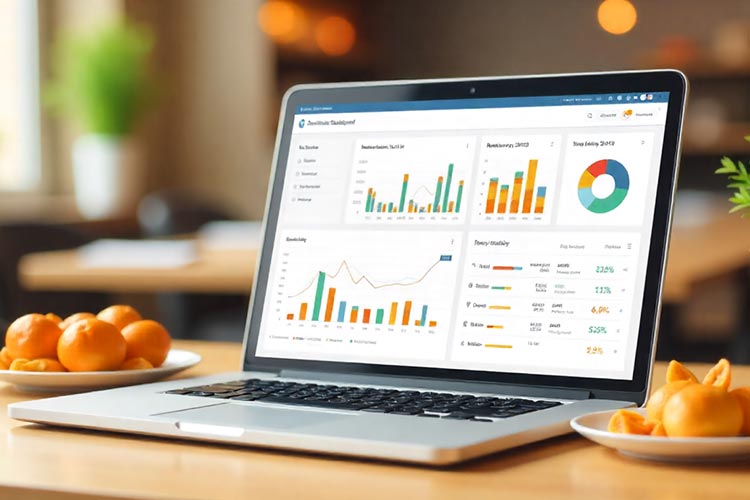
A dead dish stays on the card for months when nobody reads the till. Data-driven restaurant decisions are the one or two changes you make after that read. They are not a dashboard you open once and forget. In Bangladesh, a weekly read beats a quarterly slide deck. The rush and the power cut already happened. The till should say what they did to sales.
Quick answer: Data-driven restaurant decisions start from item sales, voids, the busy hour, and stock that never moves. Drop or fix one slow dish. Staff the rush you can see. Stop reordering what spoiled. A restaurant POS gives those numbers after close. Dimdul installs Riser POS for that record, not as a forecast tool.
Written by Dimdul, House 10, Road 4, Kaderabad Housing, Mohammadpur, Dhaka-1207. Last updated: 16 October 2026.
What are data-driven restaurant decisions?
They are choices tied to numbers from your floor. The useful numbers are small. What sold. What was voided or given away. Which hours paid the roster. Which ingredients sat until they spoiled. You do not need a data team. You need ten minutes after close, once a week, and a till that did not skip lines.
A point-of-sale system records the sale when it happens, so you can read it later. If the item never hit the bill, it is not in the report. The report cannot repair a skipped line.
Grocery and clothing shops use Riser POS Retail. Medicine shops use Riser POS Pharmacy. This page is for restaurants, cafes, bakeries, tea stalls, and cloud kitchens. The habit map is restaurant business tips in Bangladesh.
Which four numbers should you read first?
Read these before you change the menu. If the till cannot show them, fix the till first.
Item sales
Rank dishes by quantity for the last seven days. The top five are your real menu. A dish below that, with its own protein or sauce, is a candidate to cut or merge. How to cut without losing regulars: optimize your restaurant menu.
Voids and comps
A void is not a crime. A void that nobody recorded is the problem. A Friday spike, with no festival offer, usually means a training gap or a fight at the till. One person should own the open check. Corrections happen in the back. That habit sits with restaurant staff.
The busy hour
Count tickets by hour. Do not trust how the night felt. Staff the peak you can see. A full crew on a dead Tuesday is overtime you chose. A short bench at iftar is covers you lost. Change the roster from the same sheet.
Stock that did not move
If mutton korma sold twice and you bought for twenty, the purchase list is wrong. The guest is not. Tie that line to restaurant stock management and to restaurant expenses. Inventory on a restaurant POS only helps when every item is tapped.
What should you change this week?
Change one row. Read the same row next week. Do not chase ten metrics in one sitting.
| What you see | Likely cause | One change |
|---|---|---|
| High quantity, thin cash | Portions drifted, or the price is low | Weigh three plates. Then change the price or the garnish |
| Low quantity, and a unique ingredient | A dish only the owner loves | Drop it or merge it. Update the till and the QR menu the same hour |
| Voids up on one cashier | Training, or no rule for comps | Shadow that shift. Use a manager void if you have one |
| The busy hour is busy, and tickets are slow | The pass or the floor is stuck | Add a kitchen display or a reliable printer |
| The same item sells out every night | Prep or the buy is short | Raise prep. Mark it sold out on the QR menu earlier |
| The stock report and the shelf disagree | Skipped lines, or theft | Count meat, oil, and cheese. Then fix the till habit |
Write the change in one sentence before you leave. “Drop the fish plate” is a decision. “Look at the numbers sometime” is not.
Example, not a Dimdul customer result. A 28-seat room looked at one week. Biryani was the top dish. A fish plate sold four times and used a fish nothing else used. These data-driven restaurant decisions were small. Drop the fish for now. Stop buying that fish. Voids sat on one cashier, so the owner shadowed Saturday. Friday evening was the peak, so Tuesday did not get an extra cook. None of that needed a forecast.
What is not a sales decision?
Facebook likes, ad reach, and a delivery-app star rating are marketing signals. They do not tell you which tray spoiled. A website chart is noise for a 20-seat cafe that nobody visits.
Riser POS does not publish Foodpanda or Pathao ingest, bKash or Nagad in the till, or Mushak 6.3 filing. Walk-in sales still belong on your restaurant POS. Aggregator payouts stay in those apps. Do not add the two piles and call the sum one number.
A notebook can hold item totals if one person writes every plate. It fails when two people edit it, or when a comp never hits the page. Offline POS keeps billing during load-shedding, then syncs. A bill that was never written is a sale you cannot decide from.
How does Riser POS fit the weekly read?
Riser POS records orders, tables, a kitchen display or a print ticket, a QR menu, and inventory as items sell. You can put a customer name on the bill when the guest allows it. It is not a forecasting engine. It is not an ads dashboard. You read sales after close. Then you decide.
Published price (August 2026): ৳2,000 per month plus ৳5,000 installation (domain, hosting, and training). There is no self-serve free trial. The math is on Riser POS price in Bangladesh. For how billing tools differ by shop type, see POS software in Bangladesh.
Next step
WhatsApp Dimdul to see item sales and voids on a real till: 01538-004738. Ask for last week’s top dishes and bottom dishes. Skip the slide deck. Money page: Riser POS.
Frequently asked questions
Write last week’s top five dishes and the sales total for each day. Drop one slow item. Fix one purchase line. Then put every order on a till, so a void cannot vanish.
No. Riser POS is billing, tables, a kitchen display, a QR menu, inventory, and offline selling. It can store a name on the bill when you type one. You read the report. You change the menu and the roster.
Weekly for item sales and voids. Monthly for a count of meat, oil, and cheese. Daily is too often, unless you are training a new cashier.
Essential selling can continue offline on Riser POS, then sync when the line returns, depending on setup. A lost bill is a lost decision. Paper still counts if you write the plate before you forget it.
Mohammadpur, Dhaka, Bangladesh. Contact [email protected] or WhatsApp 01538-004738.
