
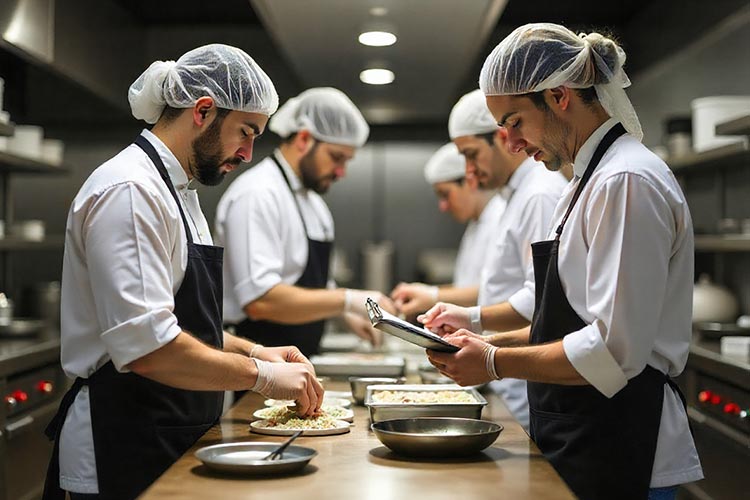
A guest sees a sticky table before they taste the biryani. Restaurant health and safety in Bangladesh is a set of habits you can check on one shift. Clean hands. Raw food kept away from cooked food. Cold storage that still smells right. A cook sent home when they are feverish. This page is for restaurants, cafes, bakeries, tea stalls, and cloud kitchens. It is a floor routine. It is not a legal opinion.
Quick answer: Restaurant health and safety starts with five checks. Soap that staff use. Raw food kept off cooked food. FIFO labels. Ill handlers off the line. A clear exit. Train one habit a week. A restaurant POS can log waste. It does not inspect the kitchen. Dimdul installs Riser POS for billing and inventory.
Written by Dimdul, House 10, Road 4, Kaderabad Housing, Mohammadpur, Dhaka-1207. Last updated: 16 October 2026.
Why does restaurant health and safety matter in Bangladesh?
One dirty plate moves on WhatsApp faster than your best photo. Regulars forgive a slow ticket. They do not forgive hair in the soup, or a toilet with no soap. A burn, a slip, or a sick cook also puts every plate that night at risk.
Your municipality sets the license rules for your shop type. Dimdul does not publish fine amounts or certificate names. Keep the trade license, and any health papers your area asks for. Ask a local lawyer or accountant when you rebuild or add a branch.
The World Health Organization lists five habits for safer food. Keep clean. Separate raw and cooked. Cook thoroughly. Keep food at safe temperatures. Use safe water and raw materials. The short version is the Five Keys to Safer Food manual. Your shift is where those habits either happen or do not.
Grocery and clothing shops use Riser POS Retail. Medicine shops use Riser POS Pharmacy. This page is the food floor. The wider habit list is restaurant business tips in Bangladesh.
What should you check on every shift?
Pick one owner for the last walk. If two people “check,” nobody does. Use the same rows every day. Add a new row only after the current rows stick.
| When | Check | A fail looks like |
|---|---|---|
| Before service | Soap and water at the pass and the guest toilet | Sanitizer only, and hands still greasy from the tawa |
| Before service | A raw board and knife, away from bread and rice | One board for chicken and for cooked rice |
| During service | Tables and the pass wiped between turns | The next guest sits on the last spill |
| After a power cut | Fridge door shut. Smell milk and marinade first | You serve it because “it was only an hour” |
| After close | Grease off the kitchen floor. Waste noted | A slip waiting for the morning mop |
| After close | Exit and extinguisher path clear | Chairs or a gas cylinder in the way |
Print the table. Tick it in pen. A photo of the tick list is enough if you do not want another app.
How do you keep raw food off cooked food?
Raw chicken, fish, and marinade stay below cooked rice, bread, and plated food. Use a second board and a second knife when you can. Colour-code them if the team is large. Never set a cooked tray on a surface that still has raw drip.
Use one cloth for tables and a different cloth for the raw area. The floor cloth never touches the pass. Wash or replace a cloth when it smells, not at the end of the week.
Cooked food that sat warm on the pass should be served now or chilled. Do not leave it beside the raw tub. If you are unsure, throw it out. A wasted tray costs less than a sick table.
Dates belong on the tub. First in, first out means the older tub is in front. The buying side of that habit is restaurant stock management. This page only asks you to label and to separate.
Water for cooking, and ice, should be water you would drink. A cloudy jerry can at a tea stall is a guest risk. It is not a saving.
What do you do when the fridge warms up?
Load-shedding is normal in Dhaka. A warm fridge is not a small problem. When power returns, do not guess. Open the door once. If milk, cream, or marinade smells off, discard it. Then keep the door closed.
Write what you threw out. That note belongs with restaurant expenses. Spoiled stock is a cost. It is not a mystery at month end.
Guests still want a bill while the lights are out. A torch or a phone light at the till helps them leave in order. Offline POS lets you close those bills and sync later. The bill is not the hygiene check. The check is the food you chose not to serve.
How do restaurant staff stay off the line when they are ill?
Fever, vomiting, or an open cut on the hand means that person does not touch open food. Another station covers, or you run short that night. Restaurant staff habits include saying “go home” without a punishment, when that keeps the room safe.
Training is five minutes, not a poster nobody reads. One habit a week. Hands first. Then boards. Then the fridge after a power cut. Repeat it on a quiet afternoon. Repeat it again before Eid, when the rush hides bad shortcuts.
Name the person who refills the soap before 4pm. An empty bottle at 7pm is a failed check. It is not proof that you were busy.
The guest toilet needs the same soap, a bin, and a light that works. Guests judge the room from that door more often than from the kitchen they cannot see.
How do you keep the exit usable?
Every person on the shift should know where the extinguisher is. They should also know which door to use if the room fills with smoke. Keep that path empty. Stacked chairs and gas cylinders do not belong there.
Dimdul does not publish a required drill calendar or an inspection score. Walk the path yourself twice a year. Walk it again after you move the kitchen.
What can a restaurant POS record, and what can it not?
A restaurant POS is not a health certificate. It will not read a fridge thermometer. It will not pass a municipal visit for you. It can make waste and sold-out items harder to hide. That record supports restaurant health and safety only when a person still looks at the food.
| Habit | Paper only | Restaurant POS plus a person |
|---|---|---|
| Waste | A bucket and a guess | A waste note or a void on the ticket |
| A spoiled item still on the card | The kitchen fires it anyway | Mark it sold out on the till and the QR menu |
| Stock rotation | An argument at month end | Inventory deducts as you sell. You still count meat |
| Who comped a plate | An oral story | A recorded void, if you turn that on |
Riser POS records orders, a kitchen display or a printed ticket, a QR menu, inventory, and offline selling. It does not monitor temperature. It does not file Mushak 6.3, take bKash or Nagad inside the till, or pull Foodpanda or Pathao orders. Published price (August 2026): ৳2,000 per month plus ৳5,000 installation (domain, hosting, and training). There is no self-serve free trial. Full numbers: Riser POS price in Bangladesh.
Example, not a case study. A Mohammadpur biryani counter kept failing the soap check on Fridays. The owner moved the refill to 4pm and gave it one name. The 7pm rush stopped being the moment they found an empty bottle. The food did not improve because of software. It improved because the check had an owner.
For a wider look at billing tools, see POS software in Bangladesh.
Next step
WhatsApp Dimdul if you want to see waste notes and sold-out flags on Riser POS: 01538-004738. Ask for the report after close. Do not ask for a food-safety audit. Money page: Riser POS.
Frequently asked questions
Wash hands, keep surfaces clean, and keep raw food off cooked food. Store cold items cold. Rotate stock with FIFO. Send ill food handlers home. Keep the fire exit clear. Match your local license with a qualified adviser.
No. Riser POS is billing, tables, a kitchen display, a QR menu, inventory, and offline selling. Hygiene is your procedure, your training, and your local authority. The software does not replace that visit.
Use a five-minute huddle before the rush. One habit a week: hands, boards, or the fridge. Repeat that habit until it sticks. Then add the next one.
Yes, if you turn on a waste note or a void. You can then see spoilage when you review expenses. A small stall can still use a bowl and a twice-weekly weight, if one person writes it down.
Mohammadpur, Dhaka, Bangladesh. Contact [email protected] or WhatsApp 01538-004738.
